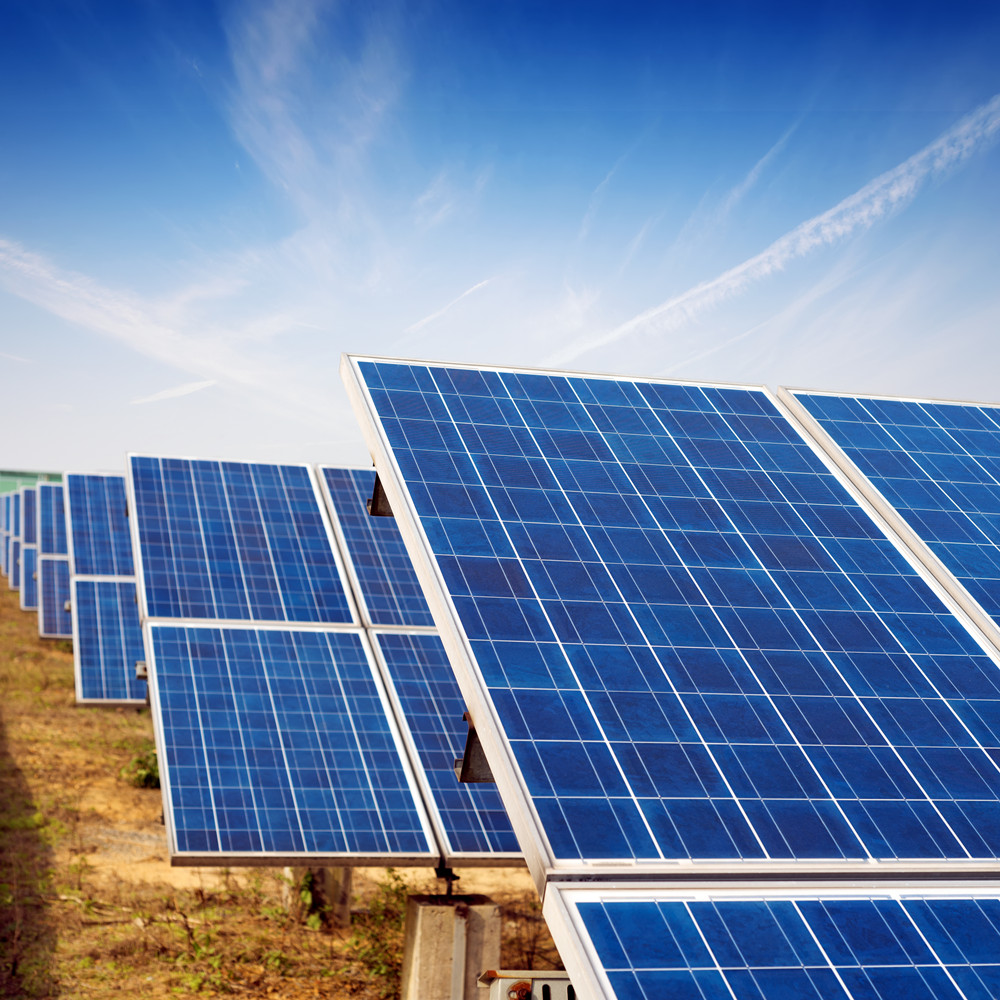
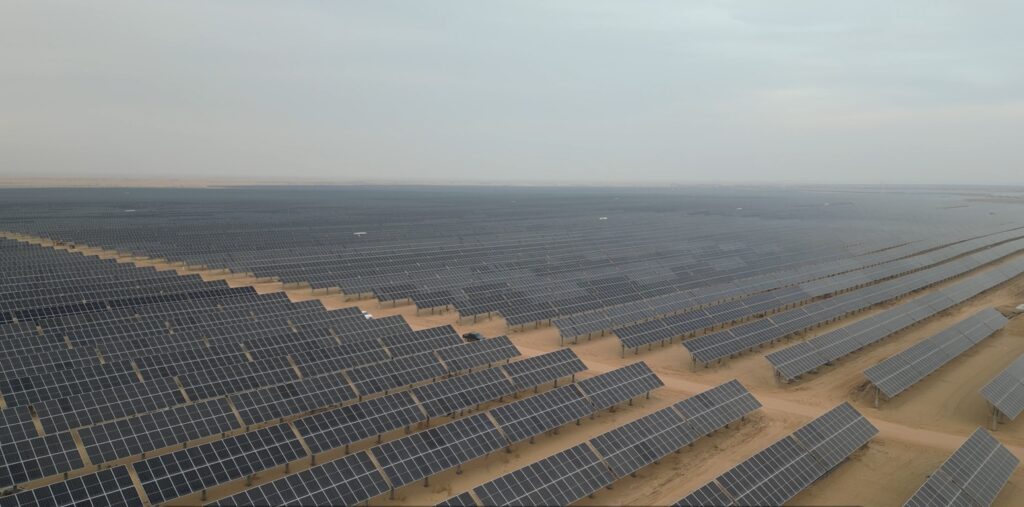
The Ulan Buh Desert Northeast New Energy Base Project, a pivotal 2,000-megawatt photovoltaic initiative in Inner Mongolia, has achieved full grid connection. This vast solar array symbolizes China’s ambitious shift toward renewable energy and represents a groundbreaking model of ecological restoration, successfully converting barren desert into a source of clean power and greenery.
Covering approximately 40,000 mu (nearly 4,000 acres), the project generates approximately 3.3 billion kilowatt-hours of clean electricity annually, effectively reducing standard coal consumption by about 1 million tons and cutting CO₂ emissions by 2.82 million tons each year.
01 Strategic Imperative: Powering the Energy Transition
Located at the top of the Yellow River’s “Great Bend,” the Ulan Buh Desert was historically a significant source of sandstorms affecting Northern China. The Ulan Buh Desert Northeast New Energy Base Project transforms this challenging landscape into a strategic asset for national energy security and ecological protection.
As a cornerstone of China’s “14th Five-Year Plan” for energy development in Inner Mongolia, this project is integral to a larger regional clean energy cluster. This cluster has a grand plan to reach 12,000 megawatts, combining 3,500 MW of wind power with 8,500 MW of solar power.
The base’s 3.3 billion kWh of annual output powers millions of homes and supplies critical energy to the Eastern China grid. It plays a vital role in helping China meet its dual-carbon goals—peaking carbon emissions before 2030 and achieving carbon neutrality by 2060—by providing stable, large-scale renewable energy.
02 Technological Innovation in a Harsh Environment
Executing a project of this magnitude in a desert environment required significant technological ingenuity to ensure efficiency and durability.
A core innovation is the hybrid “fixed + tracking” mounting system. A substantial portion of the photovoltaic panels are mounted on intelligent, single-axis trackers that follow the sun’s path across the sky. This technology boosts energy generation by 15-20% compared to fixed arrays, maximizing energy yield from the abundant desert sunlight.
Combating dust and sand—the natural enemies of solar efficiency—is another critical challenge. The project employs advanced nano-self-cleaning coatings on the panels. These hydrophobic coatings prevent dust from firmly adhering, allowing wind and occasional rain to carry it away more easily. This innovation, combined with a robotic cleaning system, keeps performance losses due to soiling below 5%, a remarkable feat in such a dusty environment.
03 The “PV + Ecology” Model: A Blueprint for Desert Revitalization
The project’s most celebrated achievement is its seamless integration of energy production with desertification control and ecological restoration. This “PV + Ecology” model operates on a multi-layered principle: generating electricity above, stabilizing sand below, and cultivating growth between.
The solar panels themselves create a favorable microclimate—they reduce wind speed by approximately 35% and decrease ground evaporation by about 20%, sheltering the land beneath. Below the panels, workers first stabilized the moving dunes with straw checkerboard barriers. They then planted drought-resistant, sand-fixing flora like Haloxylon ammodendron (saxaul).
In the spaces between panel rows, the project pioneers “PV + Agriculture.” Trials are underway with cash crops like goji berries and alfalfa. A particularly successful agroforestry model involves planting saxual and inoculating it with Cistanche deserticola, a valuable parasitic herb known as “desert ginseng.” This crop can generate an estimated economic value of over 3,000 RMB per mu, creating a sustainable revenue stream from rehabilitated land.
04 Generating Multifaceted Economic and Social Value
The project’s benefits extend far beyond the electricity it feeds into the grid, creating a multiplier effect for the local economy and community.
Financially, the annual electricity generation brings substantial revenue. Furthermore, the 2.82 million tons of annual CO₂ abatement translate into valuable carbon credits within China’s growing emissions trading scheme, adding another layer of financial and environmental ROI.
The project has been a catalyst for local employment and skills development, creating over 2,000 jobs during construction and for ongoing operations and maintenance. Many of these positions have gone to local herders and farmers, facilitating a just transition.
It fosters new rural industries, from maintaining the solar arrays and cleaning panels to managing the inter-row plantations and processing Cistanche. This diversification helps build a more resilient local economy centered on green technology and sustainable land use, offering a replicable model for other desert regions.